This guide breaks down what workers' compensation actually covers, who is required to have it, what it costs, and how to get it set up without overpaying.
What Workers' Compensation Insurance Actually Is
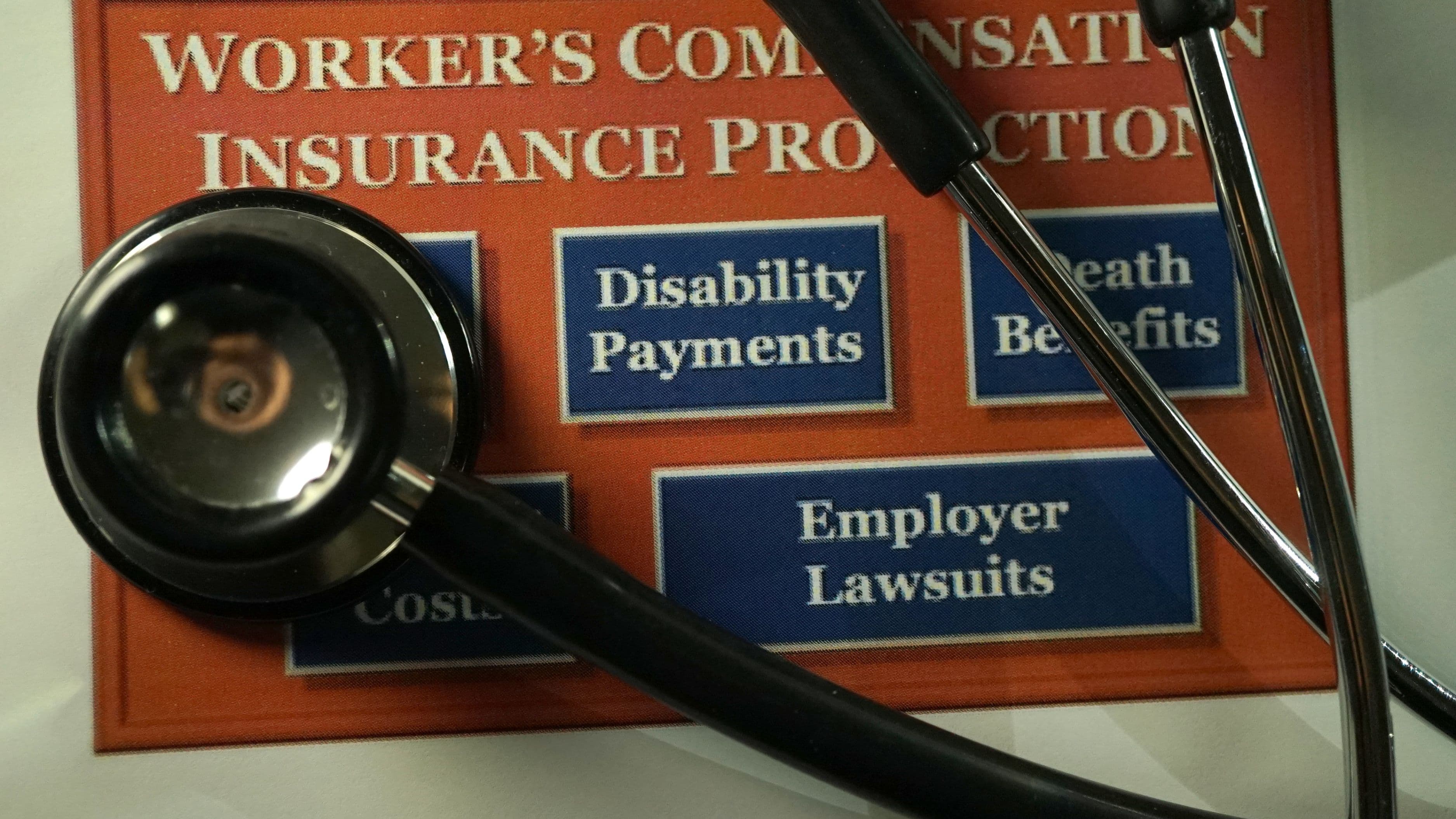
Workers' compensation is a form of business insurance that covers employees who are injured or become ill as a direct result of their job. When a covered incident happens, workers' comp pays for the employee's medical treatment, a portion of their lost wages while they recover, and rehabilitation costs if needed. If an employee dies from a work-related incident, workers' comp typically provides death benefits to their dependents.
The system works as a trade-off. Employees who are covered by workers' comp give up the right to sue their employer for negligence in exchange for guaranteed access to medical and wage benefits. Employers pay premiums for coverage, knowing that a workplace injury won't expose them to an unlimited civil lawsuit. This no-fault structure is the core of why workers' comp exists – it was designed to protect both parties from the unpredictability of litigation.
What workers' comp does not cover is equally important to understand. It doesn't cover injuries that happen outside of work, illnesses unrelated to the job, or incidents caused by intoxication or intentional self-harm. It also doesn't typically cover claims from independent contractors – though that line is frequently contested, and misclassifying employees as contractors is one of the most common and costly compliance mistakes small businesses make.
Are You Required to Have It?
The short answer: in almost every state, yes – if you have employees. Workers' compensation requirements are set at the state level, not the federal level (with limited exceptions for federal employees and specific industries). That means the specific rules vary, but the broad reality is that nearly every US state requires employers with at least one employee to carry workers' compensation coverage.
The exceptions and variations are worth knowing. A handful of states – Texas being the most prominent – do not require most private employers to carry workers' comp. However, even in Texas, being a "non-subscriber" who opts out comes with significant risk: employers who opt out lose the legal protections that workers' comp provides and become fully liable to lawsuits from injured workers. Most businesses in non-mandate states still carry coverage for exactly that reason.
Some states exempt very small businesses from the requirement. In Alabama, for example, employers with fewer than five employees may be exempt. In Mississippi, the threshold is five employees. Florida exempts construction sole proprietors, though that industry otherwise has strict requirements. The threshold, exemptions, and definitions of "employee" vary enough that looking up your specific state's requirements – not relying on a general rule – is essential.
Certain industries also face stricter requirements. Construction and roofing in particular are subject to tighter workers' comp rules in most states, sometimes requiring coverage even for sole proprietors who would otherwise be exempt. High-risk industries like trucking, manufacturing, and healthcare often have additional compliance requirements layered on top of the standard state mandate.
What Happens If You Don't Have It
The consequences of operating without required workers' comp coverage are significant and can compound quickly if an incident occurs. State penalties for non-compliance vary but commonly include fines of $1,000–$10,000 or more depending on the state and how long you've been operating without coverage. Some states impose criminal penalties for willful non-compliance. California, for example, can classify operating without workers' comp as a misdemeanor.
Beyond state fines, the real exposure is financial liability. If an uninsured employee is injured on the job, you're personally responsible for their medical costs, wage replacement, and any legal judgment against you – without the liability cap that workers' comp coverage provides. Medical treatment for a serious injury can run into six figures quickly, and a lawsuit from an injured worker with no insurance backstop has no practical ceiling. This is the risk that makes going without coverage genuinely dangerous for small business owners, not just technically non-compliant.
Many states also maintain a state fund that pays benefits to injured workers of uninsured employers and then pursues reimbursement from the employer directly. This means the financial obligation doesn't disappear just because you couldn't afford coverage.
What Workers' Comp Costs
Workers' comp premiums are calculated as a rate per $100 of payroll. The rate depends on the type of work your employees do, your state, and your claims history over time. Low-risk roles like office workers might see rates of $0.25–$1.00 per $100 of payroll. Higher-risk roles like construction, roofing, or manufacturing can have rates of $5–$20 or more per $100 of payroll, reflecting the elevated likelihood of injury.
A small business with $200,000 in annual payroll and office-based employees might pay $500–$2,000 per year in premiums. The same payroll in a roofing or construction context could result in $10,000–$40,000 annually. These ranges are meaningful to understand upfront because workers' comp is not a flat-rate product – the nature of the work drives the cost more than most other factors.
Your claims history also matters over time. A business that maintains a clean record with no or few claims will see its rate adjusted downward through what's called an experience modification factor (EMR or experience mod). A higher-than-average claims rate pushes the EMR – and premiums – up. Managing workplace safety isn't just a compliance issue; it has a direct effect on what you pay for coverage year over year.
Where to Get Coverage
Most small businesses buy workers' comp through a private insurance carrier – the same companies that offer general liability, commercial auto, and other business coverage. Getting quotes from multiple carriers through an independent broker is the most efficient way to compare rates for your specific payroll and risk classification. Brokers who specialize in small business insurance will often have access to more carriers and better rates than going directly.
Some states operate state-funded workers' comp programs that serve as an alternative or default option, particularly for businesses in high-risk industries that struggle to find private coverage. States like California (State Compensation Insurance Fund), Washington, North Dakota, Ohio, and Wyoming operate state-run programs that provide coverage where the private market may be limited.
Pay-as-you-go workers' comp is a newer option worth knowing about, particularly for businesses with variable or seasonal payroll. Rather than paying a large annual premium based on estimated payroll and then reconciling at audit time, pay-as-you-go calculates and charges premiums in real time based on actual payroll each pay period. This eliminates the lump-sum payment burden and reduces the end-of-year audit adjustment that can catch small businesses off guard.
Independent Contractors: The Misclassification Risk
One of the most common workers' comp compliance mistakes is assuming that independent contractors don't need coverage – and then discovering that the workers in question don't actually meet the legal definition of contractors. State labor agencies and the IRS apply specific tests to determine whether a worker is an employee or a contractor, and the bar for genuine contractor status is higher than many business owners realize.
If a state audit or injury claim determines that your "contractors" were actually employees, you're retroactively liable for the workers' comp coverage you should have been carrying, plus penalties. This risk is particularly acute in industries like construction, landscaping, trucking, and home services, where contractor relationships are common but the actual work arrangements often resemble employment. If workers follow your schedule, use your tools, and work exclusively for you, they're likely employees regardless of what the contract says.
When in doubt, consult an employment attorney or your state's labor department before assuming contractor status protects you from coverage obligations.
Mistakes to Avoid
Waiting until you hire your second or third employee to look into workers' comp is a common mistake. In most states, the requirement kicks in with the first employee. Starting the coverage research process before you hire – not after – keeps you compliant from day one and avoids the scramble of getting coverage quickly under time pressure.
Underestimating payroll on your initial application is another trap. Workers' comp premiums are audited annually based on actual payroll. If you significantly understate payroll to reduce initial premiums, you'll face a large true-up payment at audit time that can be a cash flow shock. Provide accurate estimates when applying and review them with your carrier before the policy renews.
Treating workers' comp as a set-it-and-forget-it purchase leads to missed opportunities to reduce premiums through workplace safety programs, classification reviews, and EMR management. Review your policy annually, particularly as your business changes – adding new types of employees, expanding into new work categories, or adding part-time staff all have workers' comp implications that can affect your rate.
FAQ
Does workers' comp cover sole proprietors? Most states allow sole proprietors and single-member LLCs to exclude themselves from their own workers' comp policy, which can reduce premiums. However, in some industries – construction and roofing in particular – sole proprietors may be required to carry coverage even for themselves. Check your state's specific rules before assuming you're excluded.
If I have only one part-time employee, do I need workers' comp? In most states, yes. The employee threshold in the majority of states is one employee, and part-time status typically doesn't exempt a worker from coverage. There are state-specific exceptions, but operating without checking is a risk that can result in significant penalties.
Can I be denied workers' comp coverage? Private carriers can decline to cover high-risk businesses or those with poor claims histories. If you're denied by the private market, your state's assigned risk pool or state-run fund is typically required to provide coverage as a last resort. The premiums in assigned risk pools are generally higher than private market rates.
What's the difference between workers' comp and general liability insurance? Workers' comp covers injuries to your own employees. General liability covers injuries to third parties – customers, visitors, members of the public – and damage to their property. Both are important, but they cover completely different situations. A customer who slips in your store is a general liability claim. An employee who slips in your warehouse is a workers' comp claim.
How does workers' comp work if my employees work remotely? Workers' comp coverage for remote employees generally follows the state where the employee works, not where the business is incorporated. If you have employees working remotely in multiple states, you may need coverage that extends to each of those states. Multi-state coverage requirements are an area where working with an experienced broker is particularly valuable.
Outro
Workers' compensation isn't optional in most situations, and the cost of getting it wrong – whether through non-compliance or misclassification – far exceeds the cost of getting properly covered. The process of getting coverage is more straightforward than it might seem: know your state's requirements, classify your workers accurately, get quotes from a few carriers or an independent broker, and review the policy annually as your business changes. Getting this foundation right protects your employees, protects your business, and removes one of the more significant legal and financial risks that small business owners often don't think about until it's too late.
📚 Sources
U.S. Department of Labor – Workers' Compensation Overview: https://www.dol.gov/general/topic/workcomp
National Federation of Independent Business (NFIB) – Workers' Compensation for Small Business: https://www.nfib.com/content/legal-compliance/legal/workers-compensation-insurance-overview
Insurance Information Institute – Workers' Compensation Insurance: https://www.iii.org/article/workers-compensation-insurance
Texas Department of Insurance – Non-Subscriber Information: https://www.tdi.texas.gov/wc/employer/nonsubscriber.html
California Department of Industrial Relations – Workers' Compensation Overview: https://www.dir.ca.gov/dwc/WCFaqIW.html
IRS – Independent Contractor vs Employee Classification: https://www.irs.gov/businesses/small-businesses-self-employed/independent-contractor-self-employed-or-employee