Here's what's actually happening on the lender's side of the table, broken down in plain terms.
The Short Answer: It Depends on the Lender
Different lenders use different frameworks, and that's the first thing worth knowing. A traditional bank underwriting a term loan is looking at a very different picture than an online lender offering a revenue-based advance, or the SBA evaluating a government-backed loan application. The criteria overlap, but the weighting is different – which means a business that's a poor fit for a bank might be a strong candidate for an alternative lender, and vice versa.
The five factors most lenders consider – sometimes called the Five C's of credit – are character, capacity, capital, conditions, and collateral. Not every lender weighs them equally, and some alternative lenders skip several of them entirely in favor of real-time revenue data. Understanding the framework helps you figure out which type of lender aligns with where your business actually is right now.
Character: Who They Think You Are as a Borrower
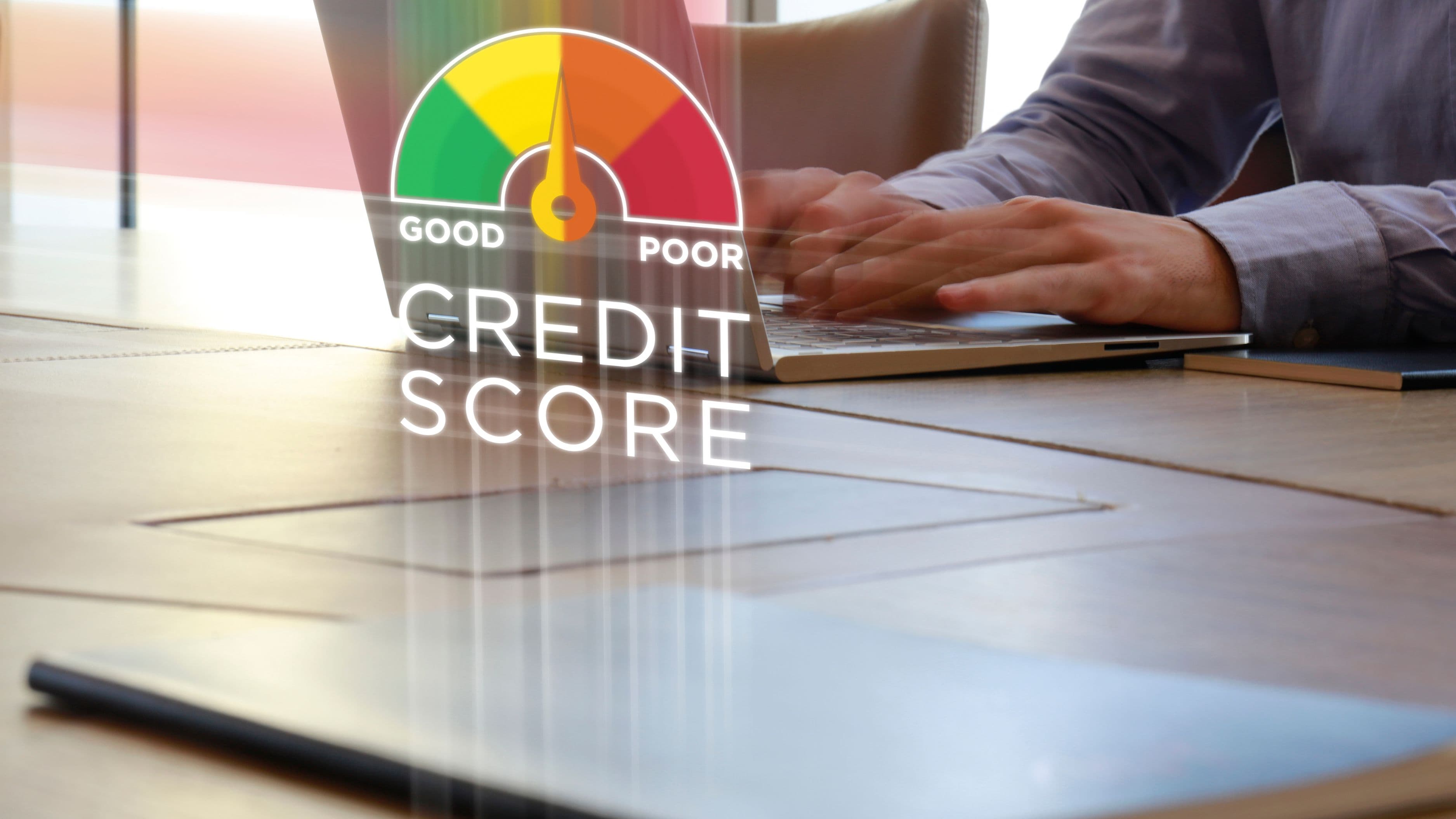
Character, in lending terms, is a shorthand for your credit history and overall reliability as a borrower. For small business loans, this typically means two things: your personal credit score and your business credit profile, if one exists.
Personal credit is weighted heavily by most lenders – especially for businesses that are newer or smaller, where the business and the owner are financially intertwined. Most traditional banks want to see a personal FICO score of at least 680, though the SBA's 7(a) program and many online lenders will work with scores down to 620–640. Anything below that significantly narrows your options and increases your cost of capital. If your personal credit has derogatory marks – late payments, collections, judgments, or a previous bankruptcy – be prepared to explain them. Lenders aren't always deal-breakers about history; they are sensitive to unexplained history.
Business credit is assessed through Dun & Bradstreet, Experian Business, and Equifax Business. Many small business owners are surprised to find they have no business credit profile at all, which isn't the same as having bad credit – it's just a thin file. Building a business credit profile through vendor accounts and a business credit card takes time, and starting that process before you need a loan is worthwhile.
Capacity: Whether Your Business Can Actually Repay
Capacity is the core underwriting question: does your business generate enough cash to service the debt? Lenders measure this through a metric called Debt Service Coverage Ratio (DSCR). The calculation is straightforward – your net operating income divided by your total annual debt obligations, including the proposed new loan payment.
Most lenders want to see a DSCR of at least 1.25, meaning your business generates $1.25 for every $1.00 in debt payments due. At exactly 1.0, you're breaking even, which gives a lender no margin for error. Below 1.0, you're technically unable to cover your debt from operations alone. A DSCR above 1.5 is considered strong and meaningfully improves your terms.
To assess this, lenders will ask for business bank statements (typically 3–12 months), tax returns (usually 2–3 years for established businesses), profit and loss statements, and sometimes a balance sheet. Online lenders and merchant cash advance providers often use bank statement data directly, pulling cash flow information programmatically rather than relying on tax returns. This is faster, but it also means the evaluation is based on recent actual performance rather than smoothed annual figures – which can work for or against you depending on your business's revenue pattern.
Capital: What You've Already Put In
Capital refers to the owner's financial stake in the business – how much of your own money you've invested and what the business's net worth looks like. A business where the owner has invested substantial personal capital is seen as lower risk, because the owner has skin in the game. A business funded almost entirely by outside debt with minimal owner equity sends the opposite signal.
For equipment loans, real estate-backed loans, and SBA programs, lenders often require a down payment or equity injection from the business – typically 10–30% of the total project cost. This isn't arbitrary; it reduces the lender's exposure and ensures the borrower is committed to the investment's success. If you're applying for an SBA 7(a) loan for a business acquisition, for example, expect to bring 10–20% as a down payment even with strong credit and revenue.
For working capital loans and lines of credit, the capital assessment is less about a down payment and more about the overall financial health of the business as reflected on the balance sheet – specifically, the ratio of assets to liabilities. A business carrying more total debt than assets (a negative net worth) faces a harder path to additional financing.
Conditions: What's Happening in Your Business and Industry
Conditions covers two related things: what the loan is for, and what the external environment looks like for your type of business. Lenders want to know the purpose of the funds – and they care whether the purpose makes business sense. "Working capital" is acceptable but vague; being able to explain specifically how the loan will be used and how it will improve the business's financial position tells a cleaner story.
Industry context also matters, particularly at traditional banks. A restaurant applying for a loan during a period when the food service sector is broadly struggling faces more scrutiny than a landscaping company in a stable regional market. This isn't about penalizing you for your industry, but about the lender's portfolio risk management. An SBA lender approving a large restaurant loan in a compressed margin environment is taking on more risk than the numbers on your P&L alone might suggest.
Be prepared to explain your business model clearly, what you're borrowing for, and why now is the right time. Lenders making judgment calls between borderline applications often do so based on how confidently and coherently a business owner can articulate their plan.
Collateral: What Backs the Loan If Things Go Wrong
Collateral is what the lender can claim if you default. Not every business loan requires collateral – unsecured term loans, revenue-based financing, and business credit cards don't – but collateral improves your terms and is often required for larger loan amounts, longer terms, or lower credit profiles.
Common forms of business collateral include equipment being purchased, business real estate, inventory, accounts receivable, and personal real estate (usually through a personal guarantee). SBA loans under $25,000 don't require collateral, but larger SBA loans require lenders to take available collateral up to the loan amount. If your business doesn't have sufficient collateral, most lenders will accept a personal guarantee as a substitute – which means if the business can't repay, you're personally liable.
Personal guarantees are standard on most small business loans and are often non-negotiable, particularly for businesses under $5M in annual revenue. Understanding this before you sign matters, because a personal guarantee effectively removes the legal separation between your personal finances and the loan obligation.
How Different Lenders Weight These Factors
Traditional banks weight all five factors heavily and require strong performance across most of them. They typically offer the lowest interest rates (6–12% for qualified borrowers) but have the highest standards. Most require at least 2 years in business, strong credit, and solid financials. Approval timelines run weeks to months.
SBA lenders work through government-backed programs that reduce the lender's risk, allowing them to approve businesses that a traditional bank might decline. The underwriting is still rigorous, but the SBA guarantee makes lenders more willing to work with thinner collateral or newer businesses. Rates are regulated and competitive (typically Prime + 2.75–3.75% for 7(a) loans). Approval timelines are longer – expect 30–90 days for standard programs, faster for SBA Express loans.
Online lenders (OnDeck, Fundbox, Bluevine, Kabbage) prioritize capacity over everything else, using real-time bank data and sometimes alternative metrics like payment processor data. They're faster (decisions in hours to days), more accessible for businesses with shorter histories or imperfect credit, but significantly more expensive – rates from 15% to 80%+ APR depending on the product and risk profile. They're a legitimate option when speed matters or when traditional lending isn't accessible, but the cost of capital is the trade-off.
Merchant cash advances aren't technically loans – they're advances against future receivables – and they carry the highest effective costs, often 40–200%+ annualized. They have the lowest approval thresholds and the least underwriting scrutiny. They make sense in very specific situations (urgent, short-term cash need with clear repayment path) and are a poor fit for general business funding. Understanding the factor rate vs. APR distinction before accepting one is essential.
Common Mistakes to Avoid
Applying for the wrong loan type is the most consistent mistake. A business with 8 months of history and a 610 personal credit score is not a bank loan candidate, and spending weeks on a traditional bank application wastes time that could be spent on more appropriate options. Matching your actual profile to the right lender category first saves significant effort.
Not knowing your own numbers is a red flag to lenders and a practical problem for you. If you can't clearly articulate your annual revenue, gross margin, monthly expenses, and current debt obligations, you're not ready to apply – and an experienced lender will notice. Spend time with your financial statements before any conversation with a lender.
Applying for too much is another common misstep. Requesting $500,000 when your revenue is $300,000 and your DSCR barely supports $150,000 in debt creates an application that's easy to decline. Right-sizing your loan request to what the numbers actually support – even if you'd like more – improves approval odds and lets you demonstrate responsible borrowing.
Taking on high-cost debt without a clear repayment plan is the operational mistake that follows approval. A merchant cash advance at 40% effective APR can be survived with the right deployment. The same product used to cover ongoing operating losses creates a debt spiral. The discipline to only borrow money when the deployment has a clear positive return is the difference between financing that accelerates your business and financing that drains it.
FAQ
What credit score do I need for a small business loan? It depends on the lender. Traditional banks typically want 680+. SBA lenders generally require 640+ for most programs. Online lenders like Fundbox and Bluevine work with scores as low as 600–620. Merchant cash advance providers often have no minimum. Higher credit scores access better rates and larger amounts across all lender types.
How long does my business need to be open to qualify? Most traditional and SBA lenders require at least 2 years in business. Many online lenders approve businesses with 6–12 months of operating history. Start-up financing (under 6 months) typically requires strong personal credit, personal assets as collateral, or SBA-specific start-up programs.
Does applying for a loan hurt my credit? Applying triggers a hard inquiry, which typically reduces your personal credit score by 2–5 points temporarily. Multiple applications in a short window can stack up. Some lenders offer pre-qualification with a soft inquiry that doesn't affect your score – worth using when available to gauge your options before formally applying.
What's the difference between a term loan and a line of credit? A term loan gives you a lump sum upfront that you repay over a set period with fixed or variable payments. A line of credit gives you access to a pool of funds you can draw on as needed, paying interest only on what you've borrowed. Term loans are better for specific investments. Lines of credit are better for managing cash flow variability.
What if I've been rejected before? Ask the lender for the specific decline reasons – you're entitled to know under the Equal Credit Opportunity Act. Common fixable reasons include insufficient time in business (wait and reapply), low personal credit (build credit before reapplying), thin business financials (grow revenue or improve profitability), and insufficient collateral (explore secured options or personal guarantees). A rejection from one lender type doesn't mean rejection across the board.
📚 Sources
US Small Business Administration – Loan Programs Overview: https://www.sba.gov/funding-programs/loans
Federal Reserve – 2024 Report on Employer Firms: Small Business Credit Survey: https://www.fedsmallbusiness.org/reports/survey/2024/2024-report-on-employer-firms
Consumer Financial Protection Bureau – Equal Credit Opportunity Act and Small Business Lending: https://www.consumerfinance.gov/compliance/compliance-resources/small-business-lending-resources/
Dun & Bradstreet – Understanding Business Credit Scores: https://www.dnb.com/perspectives/finance-credit-risk/business-credit-score-guide.html
FDIC – A Guide to Understanding Loans for Small Businesses: https://www.fdic.gov/resources/resolutions/bank-failures/failed-bank-list/banklist.html
Federal Reserve Bank of New York – Small Business Credit Survey – Report on Financing: https://www.newyorkfed.org/smallbusiness/small-business-credit-survey