The good news is that figuring out what you genuinely need isn't that complicated once you understand what each policy actually does. This guide breaks down the core types of business insurance, which ones are worth prioritizing at the start, and which ones you can defer – along with honest cost ranges and who each type is really for.
Why This Matters More Than Most New Owners Think
A lawsuit, a client injury, or a data breach doesn't care how new your business is. If you're operating without appropriate coverage when something goes wrong, the financial exposure lands on you personally if you're a sole proprietor, or on your business assets if you're an LLC or corporation. And even with a legal structure in place, there are situations where business insurance fills gaps that an LLC doesn't cover.
The other practical reality: some insurance isn't optional. If you hire employees, workers' compensation is legally required in most US states. If you lease commercial space, your landlord may require general liability. If you work with enterprise clients, contracts often mandate specific coverage minimums. Knowing what's required in your specific situation versus what's discretionary is the first step.
The Core Types of Business Insurance (Explained Simply)
General Liability Insurance
This is the foundational coverage for most small businesses and the one you're most likely to need immediately. General liability (GL) covers third-party claims of bodily injury, property damage, and basic advertising injury. In practical terms: if a client visits your office and trips and falls, if you accidentally damage a client's property while doing work, or if a competitor claims your marketing material misrepresented their product – general liability responds to those claims.
It's relatively inexpensive for most small businesses, typically $400–$1,500 per year for a basic policy depending on your industry, revenue, and risk profile. Service businesses in low-risk categories (consulting, graphic design, writing) tend to pay toward the lower end. Businesses involving physical work, client sites, or higher-footfall environments pay more.
Who needs it: Almost everyone who has clients, works on client premises, or operates in any environment where third-party injury or property damage is a realistic scenario. Many landlords and client contracts require it.
Who might not need it right away: A fully remote solo freelancer with no client-facing work, no physical location, and no contract requirements might defer this initially, but most businesses should have it in place before they start client work.
Professional Liability Insurance (Errors & Omissions)
Also called E&O insurance, this covers claims that your professional services caused a financial loss to a client. Unlike general liability, which covers physical harm or damage, professional liability covers the intangible – a mistake in your work, advice that didn't perform as expected, or a missed deadline that cost the client money. If a client sues you alleging your consulting recommendations led to business losses, or that a software bug you introduced caused them to lose data, professional liability is what responds.
This is the coverage that service-based businesses – consultants, accountants, marketers, lawyers, designers, IT professionals, architects, financial advisors – need most urgently, and it's the one they most often skip. A lawsuit alleging professional negligence can cost tens of thousands to defend even if you win, and settlements in professional liability cases can be substantial.
Typical annual premiums run $500–$2,500 for most small service businesses, with higher-risk professions (financial advisors, lawyers, engineers, medical professionals) paying considerably more. Some industries (healthcare, architecture, engineering) use specific names for this coverage – malpractice insurance, medical professional liability – but the underlying concept is the same.
Who needs it: Any business that provides advice, consulting, design, technology, financial, legal, or professional services to clients. If your client could argue that something you did or didn't do cost them money, you need this.
Who might not need it: Product-only businesses with no service component, or businesses where client contracts clearly limit liability and are backed by legal counsel. Even then, the risk of a claim without coverage is significant enough that most service businesses should carry it.
Business Owner's Policy (BOP)
A Business Owner's Policy bundles general liability and commercial property insurance into a single package that's typically cheaper than buying both separately. If you have a physical location – even a home office with business equipment – or if you own business assets beyond a laptop, a BOP is often more cost-effective than standalone policies.
The commercial property component covers business-owned equipment, inventory, furniture, and the physical space against covered perils (fire, theft, certain weather events). For a business operating primarily from a home office with a few thousand dollars of equipment, the property coverage may be modest. For a business with specialized equipment, inventory, or a retail or studio space, it becomes more significant.
BOP annual premiums typically run $500–$2,000 for most small businesses. Because it combines two coverages in one policy, it often costs 10–30% less than purchasing them separately.
Who it's for: Small businesses with a physical location, business equipment, or both. It's one of the most efficient starting points because it covers the two most fundamental exposure areas.
Who it's not for: Businesses in higher-risk industries (construction, manufacturing) or those with specific needs that require standalone policies. Not all businesses are eligible for a standard BOP – eligibility depends on industry and revenue.
Workers' Compensation Insurance
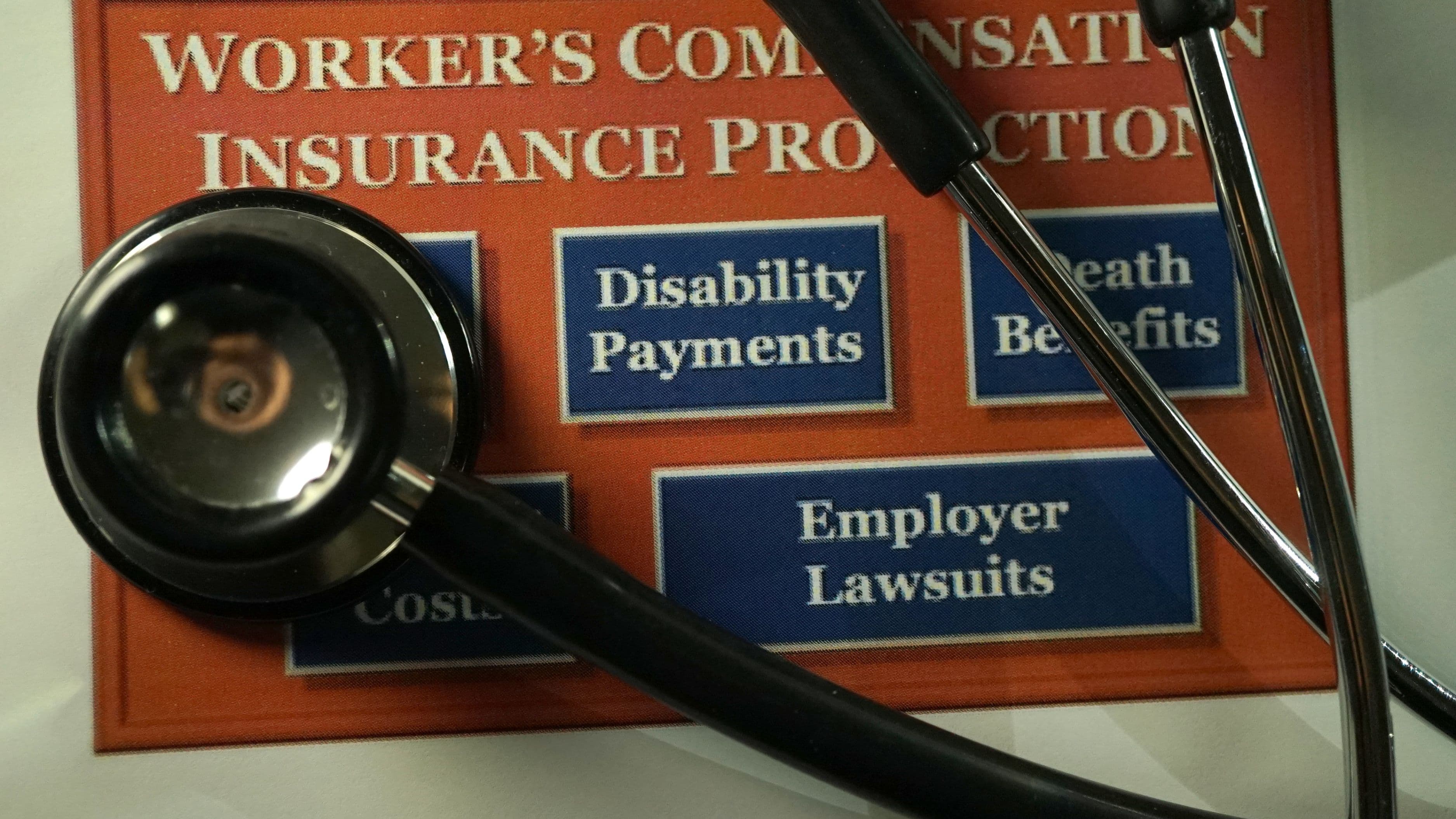
If you have employees – even one – workers' compensation insurance is mandatory in most US states. It covers medical expenses and a portion of lost wages for employees who are injured or become ill as a result of their work. The requirement applies broadly: part-time employees, seasonal employees, and in some states even certain categories of independent contractors may trigger the obligation.
Workers' comp is priced based on your payroll, the types of jobs your employees perform, and your claims history. A clerical employee has a much lower rate classification than a construction worker. Annual premiums vary widely: an office-based business with one or two employees might pay $400–$800 per year; a business with physical or manual labor roles can pay significantly more.
The penalties for operating without required workers' comp coverage are serious – fines, liability for uncovered injuries, and in some states, criminal charges. If you have employees, this is non-negotiable.
Who needs it: Any business with employees. Required in most US states with limited exceptions.
Who doesn't need it: Sole proprietors with no employees. If you work with independent contractors rather than employees, the requirement typically doesn't apply – but misclassifying employees as contractors to avoid this obligation creates substantial legal and financial risk.
Commercial Auto Insurance
If you or your employees drive a vehicle for business purposes – making deliveries, visiting client sites, transporting equipment – your personal auto insurance almost certainly won't cover accidents that happen during business use. Personal policies typically exclude business use, meaning a claim arising from a business trip could be denied.
Commercial auto insurance covers vehicles owned by your business and personal vehicles regularly used for business purposes. Premiums depend on the vehicles, drivers, and how they're used.
Who needs it: Any business where driving is part of operations – service businesses that make site visits, delivery-based businesses, contractors, and any business that owns vehicles. Even if you use your personal car occasionally for business, adding business-use coverage to your personal policy (or getting a commercial policy) is worth addressing.
Who doesn't need it: Fully remote businesses with no business-related driving.
Cyber Liability Insurance
This has moved from a "nice to have" to a meaningful consideration for any business that handles client data, processes payments, or stores sensitive information digitally – which is most businesses operating today. Cyber liability insurance covers the costs of a data breach or cyberattack: notification to affected parties, credit monitoring, legal costs, regulatory fines, and business interruption losses.
Small businesses are increasingly targeted in cyberattacks precisely because their security is typically weaker than larger organizations. According to the SBA, small businesses make up 43% of cyberattack targets. The average cost of a small business data breach runs into the tens of thousands of dollars – often more than the business can absorb without insurance.
Annual premiums start around $500–$1,500 for basic coverage for small businesses. If you collect customer payment information, store client data, or operate any SaaS or e-commerce business, this is worth serious consideration.
Who needs it: Any business handling personal data, payment information, or operating significant digital infrastructure. Especially important for e-commerce, healthcare-adjacent businesses, SaaS companies, and businesses holding sensitive client information.
Who might defer it: Very early-stage businesses with no client data, no payment processing, and minimal digital footprint. But this window is typically short.
How to Prioritize When Budget Is Tight
If you can't afford everything at once (and most new businesses can't), here's a practical prioritization framework.
Start with whatever is legally required first. If you have employees, workers' comp is mandatory and that's not negotiable. If your lease or client contracts require general liability minimums, that comes next.
After legal requirements are met, prioritize based on your biggest financial exposure. For service businesses, professional liability is typically the coverage with the highest potential claim value relative to its cost. A single professional negligence lawsuit without E&O coverage could exceed your annual revenue several times over. General liability, while less likely to result in massive claims for a typical service business, is inexpensive enough that it should accompany the E&O.
Cyber liability is increasingly a priority rather than a deferral for businesses handling client data, given how frequently small businesses are targeted and how high breach costs run. Commercial auto should be addressed immediately if driving is any part of how you operate.
A BOP that bundles general liability and property coverage is often the most cost-efficient starting point for small businesses with a physical presence, as it provides core coverage at a discount versus purchasing components separately.
What to Avoid
Don't assume your homeowner's or renter's insurance covers business activities. Personal policies typically have explicit exclusions for business use. Equipment, liability claims, and business losses are generally not covered under personal insurance.
Avoid buying policies based solely on the cheapest premium without understanding the coverage limits and exclusions. A general liability policy with a $300,000 limit may be inadequate if your client contracts specify $1 million in coverage. Read the policy or have a broker explain the limits before you sign.
Don't use independent contractor classification as a substitute for workers' comp if your workers are actually employees. Misclassification creates liability for unpaid taxes, uncovered injuries, and potential penalties that far exceed the cost of the insurance itself.
Avoid deferring insurance until "after you land your first big client." The first big client is exactly when you become exposed – to liability on their premises, to professional claims from their expectations, and to contractual requirements for coverage. Have coverage in place before the client engagement starts.
FAQ
Do I need business insurance if I'm a solo freelancer? It depends on what you do. A freelancer providing professional services (writing, design, consulting, development) benefits meaningfully from professional liability insurance. General liability may be required by clients or unnecessary depending on whether you ever work on client sites. Many solo freelancers are underinsured without realizing it, particularly without E&O coverage.
What's the minimum insurance a new business should have? At a bare minimum: whatever is legally required for your situation (workers' comp if you have employees), plus general liability if you have any client interaction or contract requirement. For service businesses, add professional liability. That combination covers the most common exposure areas at reasonable cost.
How do I get business insurance? You can get quotes directly from insurers or through brokers. Online platforms like Next Insurance, Hiscox, and Thimble are popular for small businesses because they provide quick quotes and digital policy management. For more complex needs, working with an independent insurance broker who can compare multiple carriers is often worth the time.
How much should I budget for business insurance? For a basic service business – general liability plus professional liability – budget $1,000–$3,000 per year depending on industry and revenue. A BOP for a business with a physical location adds $500–$2,000. Workers' comp varies by payroll and industry. Cyber liability adds $500–$1,500. Total annual coverage for a small service business typically runs $1,500–$5,000 for a reasonable starting package.
Does business structure (LLC vs. sole proprietor) affect what insurance I need? Your legal structure affects your personal liability exposure, but it doesn't eliminate the need for business insurance. An LLC provides some separation between your personal and business assets, but that protection has limits – and it doesn't pay for legal defense costs, settlements, or judgments that exceed your business assets. Insurance and business structure work together, not as substitutes for each other.
Wrapping Up
Business insurance doesn't need to be complicated. Start with what's legally required, then address your biggest exposure areas based on what you actually do and who you do it for. For most service businesses, that means professional liability and general liability at a minimum.
Add workers' comp the moment you hire employees. Consider cyber coverage earlier than you think you need it. And review your coverage every year as your business grows and your risk profile changes.
Getting the basics right before you need them is one of the more unsexy but genuinely important things you can do for your business in the early stages.
This article is for informational purposes only and does not constitute legal or insurance advice. Consult a licensed insurance professional for guidance specific to your business.
📚 Sources
Small Business Insurance overview – US Small Business Administration: https://www.sba.gov/business-guide/launch-your-business/get-business-insurance
Workers' compensation requirements by state – NFIB: https://www.nfib.com/content/legal-compliance/legal/workers-compensation-laws-state-by-state-comparison-57181/
Cyber threats to small businesses – SBA cybersecurity resources: https://www.sba.gov/business-guide/manage-your-business/strengthen-your-cybersecurity
Professional liability insurance explained – Insurance Information Institute: https://www.iii.org/article/what-is-professional-liability-insurance
Business Owner's Policy overview – Insurance Information Institute: https://www.iii.org/article/businessowners-policy-bop
General liability insurance guide – NFIB: https://www.nfib.com/content/legal-compliance/legal/a-guide-to-small-business-liability-insurance/