What follows are realistic cost ranges for the policies most small businesses actually buy in 2026, what drives those costs up or down, and how to think about what you actually need versus what you can skip for now.
Why "It Depends" Is Genuinely True – and What It Depends On
Before getting into specific numbers, it's worth being direct about why business insurance pricing varies so much. Insurers are pricing risk, and your business's risk profile is determined by a specific combination of factors that looks different for every business.
Industry and type of work is the single biggest cost driver. A freelance copywriter working from home faces almost no physical liability risk and moderate professional risk. A roofing contractor has significant bodily injury and property damage exposure on every job site. An urgent care clinic faces medical malpractice risk on top of everything else. The same dollar of coverage costs very different amounts depending on the statistical likelihood of a claim in your industry.
Revenue is the second major driver, particularly for professional liability and general liability. Higher revenue typically means larger contracts, more clients, more exposure, and potentially larger claims. A solo consultant billing $80,000 a year pays much less for professional liability than a consulting firm billing $2 million annually.
Number of employees affects workers' compensation directly (it's often priced per $100 of payroll) and influences other policies through the increased exposure that comes with more people working in your name.
Claims history follows you. A business with prior claims – especially frequent or large ones – will pay more at renewal and may find fewer insurers willing to quote them at standard rates.
Location matters because litigation rates, medical costs, and natural disaster exposure vary by state. A business in a high-litigation state pays more for liability coverage than an identical business in a lower-litigation state.
Coverage limits and deductibles affect cost directly. Higher limits mean higher premiums; higher deductibles mean lower premiums. The right balance depends on your risk tolerance and your ability to self-fund smaller losses.
General Liability Insurance
General liability (GL) is the most commonly purchased small business policy, and it's often the starting point for everything else. It covers bodily injury and property damage claims made against your business by third parties – a customer slipping in your store, an employee accidentally breaking something at a client's location, a visitor injured on your premises.
For most small businesses, general liability costs between $400 and $1,500 per year for a standard $1 million per occurrence / $2 million aggregate policy. The median for a sole proprietor or very small business in a low-to-moderate risk industry is often in the $500–$800 range.
Businesses in higher-risk industries pay more. A sole-proprietor general contractor might pay $1,200–$2,500 annually. A landscaping company with employees might pay $3,000–$6,000. A roofing contractor or structural work specialist can see GL premiums of $5,000–$15,000 or more annually because the claim exposure is significantly higher.
The factors that push GL costs toward the lower end: low-risk industry, no employees, no physical location open to the public, no work on client properties, low revenue, clean claims history. The factors that push it higher: physical trade work, customer-facing locations, employees, higher revenue, prior claims.
Professional Liability (Errors & Omissions) Insurance
Professional liability – also called E&O insurance – covers claims that your professional services, advice, or work product caused a client financial harm. It's the essential policy for anyone who sells knowledge, advice, or professional services rather than physical goods.
For most small service-based businesses, professional liability costs between $500 and $3,000 per year. A solo consultant, freelance designer, or small marketing agency might pay $600–$1,200 annually. A small IT services firm or software developer typically pays $1,000–$2,500. An accounting firm or financial advisory practice often pays $1,500–$4,000 depending on revenue and services provided.
Higher-risk professions – healthcare providers, attorneys, architects, engineers – typically pay significantly more. Medical malpractice is in a category of its own, often running $5,000–$30,000+ annually depending on specialty, location, and claims history.
Professional liability is priced heavily on the type of service (some industries generate far more claims than others), the revenue being insured, and prior claims. A clean history and a well-defined, limited scope of services reduce cost; broad or ambiguous service descriptions and prior claims increase it.
Business Owners Policy (BOP)
A business owners policy bundles general liability and commercial property insurance into a single package at a lower combined cost than purchasing both separately. It's designed specifically for small and medium-sized businesses and is one of the most cost-effective starting points for businesses that have both liability and property exposure.
BOPs typically cost between $500 and $2,000 per year for most small businesses, with the median falling around $600–$1,000 annually. The cost depends on the value of the property being insured, the industry, the business's revenue, and location.
The key limitation of a BOP is what it doesn't include. Professional liability is not part of a standard BOP. Workers' compensation is not included. Commercial auto is not included. If you need any of those coverages, they need to be added separately. For businesses that primarily need physical operations coverage – a small retail shop, a restaurant, a service business with an office – a BOP is a practical and cost-effective foundation.
Workers' Compensation Insurance
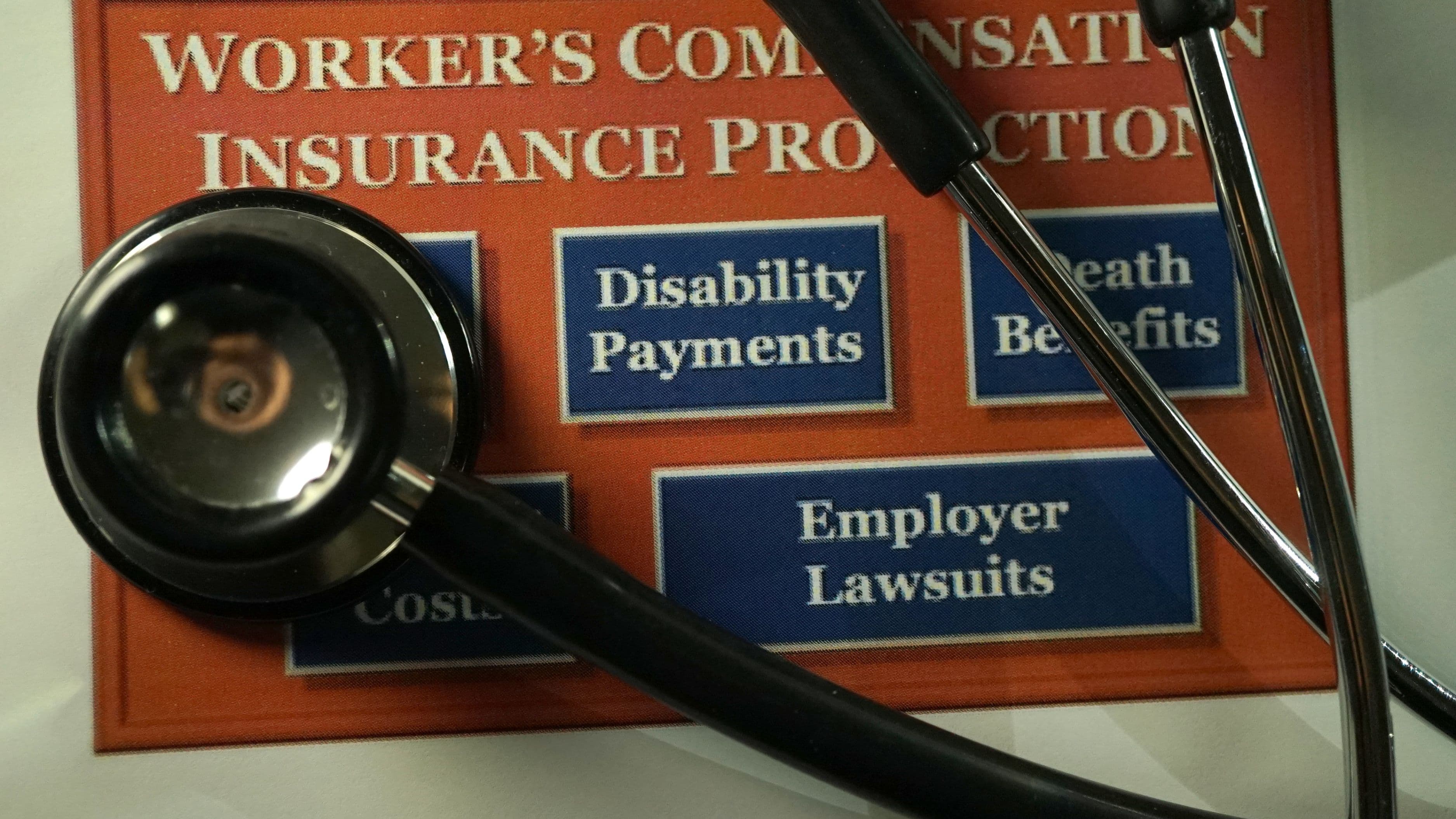
Workers' compensation is legally required in most states for businesses with employees – the threshold varies by state, but most require it as soon as you hire your first employee. It covers medical expenses and lost wages for employees injured on the job.
Workers' comp is priced primarily as a rate per $100 of payroll, with the rate varying by job classification. Office workers in low-risk roles might be classified at a rate of $0.30–$0.80 per $100 of payroll. Higher-risk trades like construction, roofing, or electrical work often carry rates of $5–$15 or more per $100 of payroll in many states.
A small office-based business with $200,000 in payroll might pay $600–$1,600 per year in workers' comp. A construction business with the same payroll might pay $10,000–$30,000. The variance is that large because the underlying claim risk is that different.
Sole proprietors without employees are often exempt from state requirements, though some states and some contracts require it anyway. If you subcontract work to others, this is an area worth clarifying with your broker, since you may be responsible for comp coverage if subcontractors are uninsured.
Commercial Auto Insurance
If vehicles are used for business purposes – not just commuting but actual business operations like hauling tools, visiting job sites, making deliveries, or transporting clients – personal auto insurance typically won't cover a claim that occurs during business use. Commercial auto insurance covers business-use vehicles properly.
For a single vehicle used primarily for business, commercial auto typically runs $1,200–$2,500 per year. Fleets of vehicles cost proportionally more. High-risk drivers, vehicles used for delivery or heavy hauling, and certain industries (trucking, food delivery) pay significantly more.
If you use your personal vehicle occasionally for business purposes and your use is light, a business use endorsement on your personal auto policy may be sufficient and is much less expensive. Talk to your broker about the actual pattern of business use before defaulting to a full commercial auto policy.
Cyber Liability Insurance
Cyber insurance has moved from a specialty product to a near-essential coverage for businesses of all sizes over the past several years. It covers costs associated with data breaches, ransomware attacks, network outages, and related liability to third parties whose data was compromised.
For most small businesses, cyber liability costs between $500 and $2,500 per year for $1 million in coverage. The cost depends heavily on the type of data you hold, your cybersecurity practices (insurers now ask detailed questions about MFA, endpoint protection, and backup procedures), your revenue, and your industry. Businesses that hold financial data, healthcare records, or payment card information pay more. Businesses with strong documented security practices often qualify for better rates.
Cyber insurance pricing has hardened significantly over the past few years following a surge in ransomware claims. Insurers now require minimum security controls as a condition of coverage in a way they didn't as recently as 2020.
What Most Small Businesses Actually Spend
Putting this together into a realistic picture, here are three representative small business profiles and what their insurance program might cost annually in 2026.
Solo freelancer or consultant (remote, no employees, $100K revenue): Professional liability at $600–$1,000 plus a small GL policy at $400–$600, plus possibly a cyber policy at $500–$800. Total: $1,500–$2,400 per year. This covers the realistic risks without over-insuring.
Small service business with a few employees and a physical office ($500K revenue): A BOP at $800–$1,500, professional liability at $1,000–$2,000, workers' comp at $1,000–$2,500, and cyber at $700–$1,200. Total: $3,500–$7,200 per year. This is a fairly comprehensive program for a professional services firm.
Small contractor with employees doing trade work ($750K revenue): GL at $3,000–$6,000, workers' comp at $8,000–$15,000, commercial auto at $2,000–$4,000 for a vehicle or two. Total: $13,000–$25,000 per year. Physical trade work with employees is genuinely expensive to insure because the risk exposure is real and frequent claims are common in the industry.
How to Actually Reduce What You Pay
The most effective ways to reduce your insurance costs don't involve cutting coverage – they involve being a better risk.
Maintaining a clean claims history is the most powerful long-term lever. Businesses that rarely or never file claims pay standard or preferred rates; businesses with frequent claims pay substantially more and may eventually be non-renewed.
Implementing documented risk management practices – safety protocols, client contract terms that limit liability, cybersecurity controls, employee training – can reduce premiums directly in some lines (cyber, workers' comp) and improves your negotiating position with underwriters broadly.
Working with an independent broker who quotes your coverage across multiple carriers consistently produces better pricing than going direct to a single insurer. Independent brokers have access to a much wider range of markets and can match your risk profile to the carriers most likely to price it competitively.
Bundling policies with the same carrier often produces multi-policy discounts and simplifies billing and claims coordination. Not all bundles make sense – some specialty lines are better placed with specialists – but keeping your core policies together is worth asking about.
Revisiting your coverage annually at renewal, not just accepting the renewal quote, is a simple practice that catches premium creep and ensures you're not paying for coverage that no longer reflects your actual business.
What to Avoid
Buying the cheapest policy without checking the limits. A $400 GL policy might have a $300,000 per-occurrence limit rather than the standard $1 million. A major claim against that policy will exhaust the limit and leave you personally exposed. Always check what the policy actually covers, not just the premium.
Skipping professional liability because you think you're unlikely to be sued. The most common professional liability claims aren't from malicious clients – they're from clients who experienced a genuine problem, had financial damage, and pursued a claim as a normal business decision. Industries with no claims history today have claims eventually.
Letting coverage lapse when business slows. A professional liability policy cancellation without a tail leaves you exposed on completed work. A lapse in GL coverage can trigger a surcharge or non-renewal when you reinstate. Continuity matters more in insurance than most business owners realize.
Not reading what's excluded. Most policies have a list of exclusions that can be surprisingly broad. An intentional acts exclusion, a professional services exclusion in a GL policy, or a known claims exclusion can eliminate coverage in exactly the scenarios you were expecting the policy to respond to. Read the exclusions before you need them.
FAQ
Can I deduct business insurance premiums as a business expense? Yes. Premiums paid for business insurance are generally deductible as an ordinary and necessary business expense under IRS rules. This includes GL, professional liability, workers' comp, commercial auto, cyber, and BOP premiums. Personal life insurance is not deductible as a business expense in most cases. Confirm with your accountant for your specific situation.
Do I need insurance if I'm a sole proprietor with no employees? Legally, probably not workers' comp. But the absence of a legal requirement doesn't eliminate the risk. As a sole proprietor, your personal assets are directly exposed to any business liability claim. Professional liability and GL coverage protect those personal assets in a way that an LLC structure does not fully address on its own.
How do I get the most accurate quote? Provide complete and accurate information about your business – revenue, number of employees, exact services provided, prior claims, and physical locations. Inaccurate or incomplete applications can result in coverage being voided at claim time. Use an independent broker who quotes multiple carriers rather than going directly to a single insurer's website.
What's the difference between an independent broker and a captive agent? An independent broker works with multiple insurance carriers and can shop your coverage across the market. A captive agent works exclusively for one carrier (State Farm, Allstate, Farmers) and can only offer that carrier's products. For small business insurance, an independent broker almost always provides better market access and pricing.
Should I buy the highest limits available? Not necessarily, but limits should reflect your actual exposure. A client contract that holds you liable for up to $2 million in damages means a $1 million policy limit leaves a gap. Review the contracts you sign, the size of the clients you work with, and the realistic financial scale of a worst-case claim when setting limits.
📚 Sources
Insurance Information Institute – Small Business Insurance Overview: https://www.iii.org/article/small-business-insurance-what-do-you-need
U.S. Small Business Administration – Business Insurance Requirements: https://www.sba.gov/business-guide/launch-your-business/get-business-insurance
National Association of Insurance Commissioners – Workers' Compensation Insurance: https://content.naic.org/article/workers-compensation-insurance
IRMI – Commercial Lines Pricing Factors: https://www.irmi.com/term/insurance-definitions/commercial-lines
Insureon – Average Cost of Small Business Insurance 2024–2025: https://www.insureon.com/small-business-insurance/cost